
Every year on October 22, people around the world recognize International Stuttering Awareness Day (ISAD) — a day devoted to understanding, acceptance, and advocacy for those who stutter.
Though often misunderstood, stuttering (also called stammering) is a common speech difference affecting roughly 1% of the world’s population — more than 80 million people globally. It typically begins in early childhood, with around 5% of children experiencing stuttering for six months or more. Of those, about 1% continue to stutter into adulthood. (Learn more stuttering facts here.)
Despite its prevalence, people who stutter often face social stigma, teasing, and even exclusion—especially when their unique way of speaking is misinterpreted.
A Brief History of ISAD
International Stuttering Awareness Day was first held in 1998 in the United Kingdom and Ireland. Since then, it has grown into a global observance supported by organizations such as the International Stuttering Association, National Stuttering Association (USA), and the European League of Stuttering Associations.
Each year, the day includes:
- Online conferences with people who stutter, speech-language pathologists, and advocates
- Community events and school activities
- Media campaigns to challenge stereotypes and promote understanding
- Efforts to amplify stuttering awareness
Stuttering Is Not What You Think
One of the goals of ISAD is to break down the many misconceptions surrounding stuttering. It is not caused by nervousness, parenting style, or lack of intelligence. It is a neurological condition that affects the timing and flow of speech.
Yet, because of these myths, people who stutter are often misunderstood. The impact can go far beyond the mechanics of speech—it can affect social participation, self-esteem, and access to opportunities.
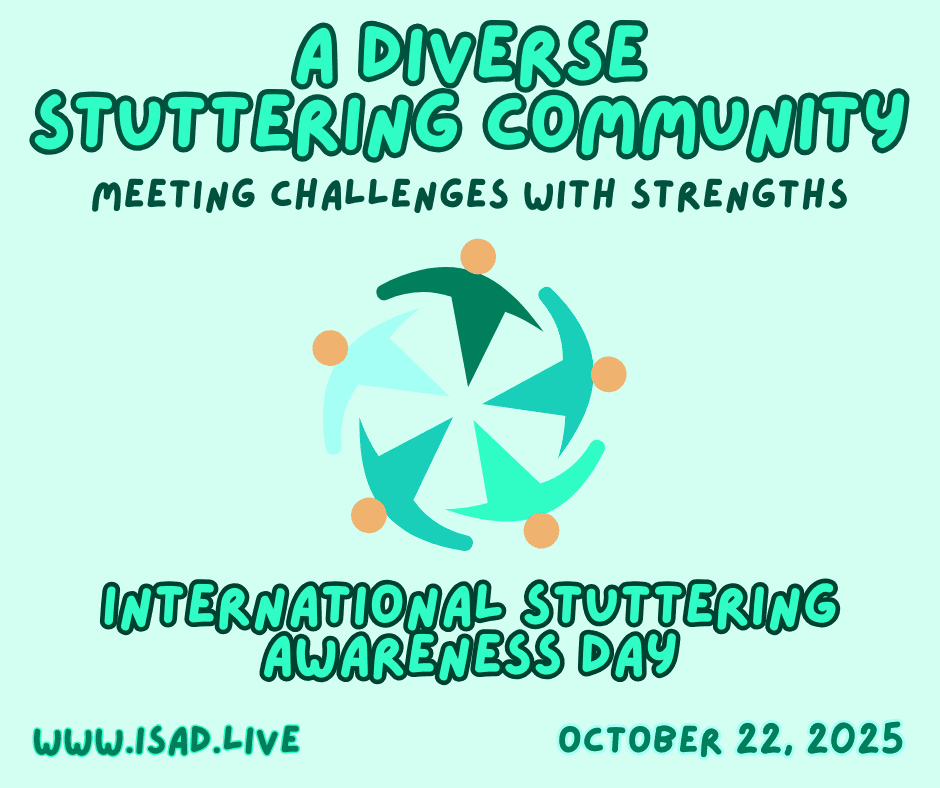
This year’s ISAD online conference theme, “A Diverse Stuttering Community – Meeting Challenges With Strengths,” encourages us to shift the conversation. Rather than focusing solely on obstacles, this theme recognizes the strengths that people who stutter bring to their communities—such as resilience, creativity, empathy, and persistence. Explore the 2025 ISAD Conference.
How Adults Can Support Children Who Stutter
Whether you’re a parent, educator, caregiver, or clinician, you can make a lasting difference in a child’s life by creating environments where they feel safe and respected when communicating.
Here are a few important ways to participate in stuttering awareness and offer support:
- Be Patient and Present – Allow children to speak at their own pace without interrupting or finishing their sentences. This reinforces that what they have to say matters.
- Normalize Communication Differences – Use classroom or family discussions to highlight that everyone communicates differently—and that’s okay. Representation in books and media can also help.
- Celebrate Participation, Not Perfection – Encourage children to express themselves, even if their speech is disfluent. Praise effort and confidence rather than focusing on fluency alone.
- Model Respect and Inclusion – Intervene when you hear teasing or mimicry, and set the tone for respectful communication. Empower peers to be supportive, too.
Sing and Speak 4 Kids: Helping Children Find Their Voice

At Sing and Speak 4 Kids, we believe every child deserves to feel confident in their ability to communicate. Our online, evidence-based program uses music, rhythm, and interactive play to support speech and language development in a joyful, low-pressure way. Try it today!
For children who stutter, musical experiences can offer a valuable outlet for expression while building communication skills and self-assurance. On International Stuttering Awareness Day—and every day—we are proud to stand with families, educators, and clinicians working to create a more inclusive world for children who speak differently.
Let us continue to listen with empathy, speak with compassion, and create spaces where every child’s voice is welcomed and respected.